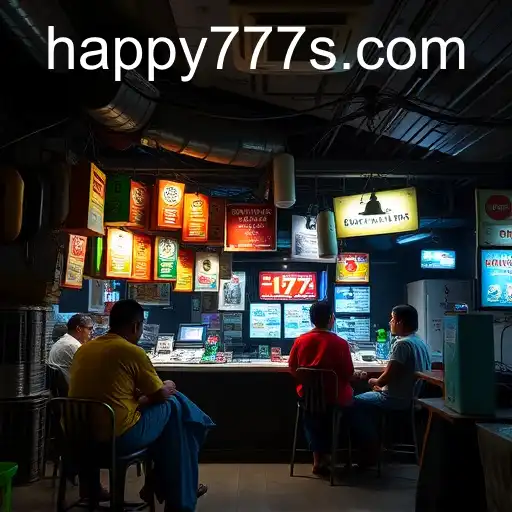
Understanding Jueteng: A Deep Dive into Its Impact and Happy777
Jueteng is a well-known numbers game that holds a significant place in the daily lives of many Filipinos. With its roots deeply intertwined in the cultural and economic fabric of the Philippines, Jueteng continues to thrive despite numerous efforts to eradicate it. This article explores the complexities of Jueteng, focusing on the emergence of "Happy777" and its role in this underground economy.TTJL
What is Jueteng?
Jueteng is an illegal lottery game that traces its origins to the Spanish colonial period in the Philippines. Over the years, it has evolved into a widespread betting system, particularly popular in Luzon and some parts of Visayas. The game involves bettors choosing a combination of numbers, typically from 1 to 37. The winning numbers are drawn daily, often twice a day, resulting in massive participation.
The Mechanics of Jueteng
Unlike official lottery systems, Jueteng operates without any structured organization. Its operations are typically carried out by individuals known as "cobradores" or collectors, who are responsible for gathering bets from participants. These collectors work under a coordinator or "cabos," who manage multiple collectors in a given area. Finally, at the top of this hierarchy is the "jueteng lord," a person responsible for orchestrating the entire operation, including the fixing of draws.BAY888
The Social and Economic Impact
Jueteng serves as a source of livelihood for many, providing employment to those involved in its operations. For some impoverished communities, it offers an opportunity to win money and help alleviate their economic burdens, albeit at a small scale for most participants. However, the payout system is designed to favor the operators rather than the bettors, with most of the earnings funneling upwards towards the jueteng lord.SG777
The prevalence of Jueteng reflects systemic issues within society, particularly poverty and limited access to formal job opportunities. This has led many to view the game as a necessary evil, deeply embedded in the socio-economic landscape. Despite its illegality, the game often receives inadvertent protection or collusion from corrupt officials who benefit from bribes paid by jueteng lords.
Government Efforts and Challenges in Eradicating Jueteng
Various administrations have attempted to combat Jueteng, recognizing its corrosive impact on governance and social order. Policy measures have ranged from intensified crackdowns to the establishment of legalized alternatives such as the Philippine Charity Sweepstakes Office's (PCSO) Small Town Lottery (STL). However, these efforts have met with limited success.
The deeply ingrained nature of Jueteng, coupled with the significant economic incentives it provides, makes its eradication a formidable challenge. Corruption among law enforcement and government officials further complicates efforts, often leading to half-hearted implementations of existing laws or even the direct protection of syndicates.
Enter Happy777: A New Player in The Landscape
Recently, the name "Happy777" has been circulating in discussions around Jueteng. Emerging as a modern incarnation within the traditional gambling ecosystem, it represents the integration of technology and innovation in the age-old game. While details about Happy777 are scarce, its existence reflects the adaptability of underground gambling networks to modern trends, possibly through online platforms or digital payment systems.
Implications of Happy777 in Jueteng
The introduction of modern elements such as Happy777 into the Jueteng scene signifies a new frontier of challenges and opportunities. On one hand, it increases the scope and reach of Jueteng operations, potentially allowing for greater participation beyond geographical constraints. On the other, it introduces additional challenges for regulatory bodies attempting to monitor and curb its growth.PHLARO
The technological aspect of Happy777 could also complicate enforcement measures, as it may involve sophisticated networks that are harder to track than traditional street-level operations. This evolution underscores the necessity for authorities to develop new strategies that address these complexities, potentially drawing from international examples where similar issues have been faced and addressed.binwin29
Looking Forward
Understanding the dynamics of Jueteng and modern influences like Happy777 is crucial for developing effective approaches to its governance. While the eradication of Jueteng remains a contentious and complex issue, addressing its underlying causes, such as poverty and lack of economic opportunities, will be key to mitigating its impact.
As Jueteng and its modern manifestations continue to evolve, it is imperative for stakeholders, including government entities, anti-corruption agencies, community leaders, and ordinary citizens, to collaborate in formulating sustainable solutions. Through concerted efforts, it may be possible to transform the socio-economic conditions that fuel Jueteng into opportunities for legitimate advancement and economic growth.